Read the ground before you back a decision.
Soil and water testing for people who have to make a decision about a site. We scope the analysis around that decision, not around a price list.
Most people arrive with a question about a site, not a list of tests.
We work with land managers, restoration teams, consultants, growers and councils across New South Wales. Most of them arrive with a question about a site rather than a list of tests. Working out which analysis actually answers that question is the part we care about.
A result is only as good as the sample it came from and the question it was asked to answer. We would rather spend twenty minutes on the phone narrowing a scope than run a broad suite that tells you very little for more money.
What the ground is actually holding.
Fertility and nutrient status, texture and physical condition, and contaminant work scoped from the site history rather than a catalogue.
- pH & EC
- Organic carbon
- Colwell P
- CEC & ESP
- Particle size
- Metals & TRH
What the source is doing this season.
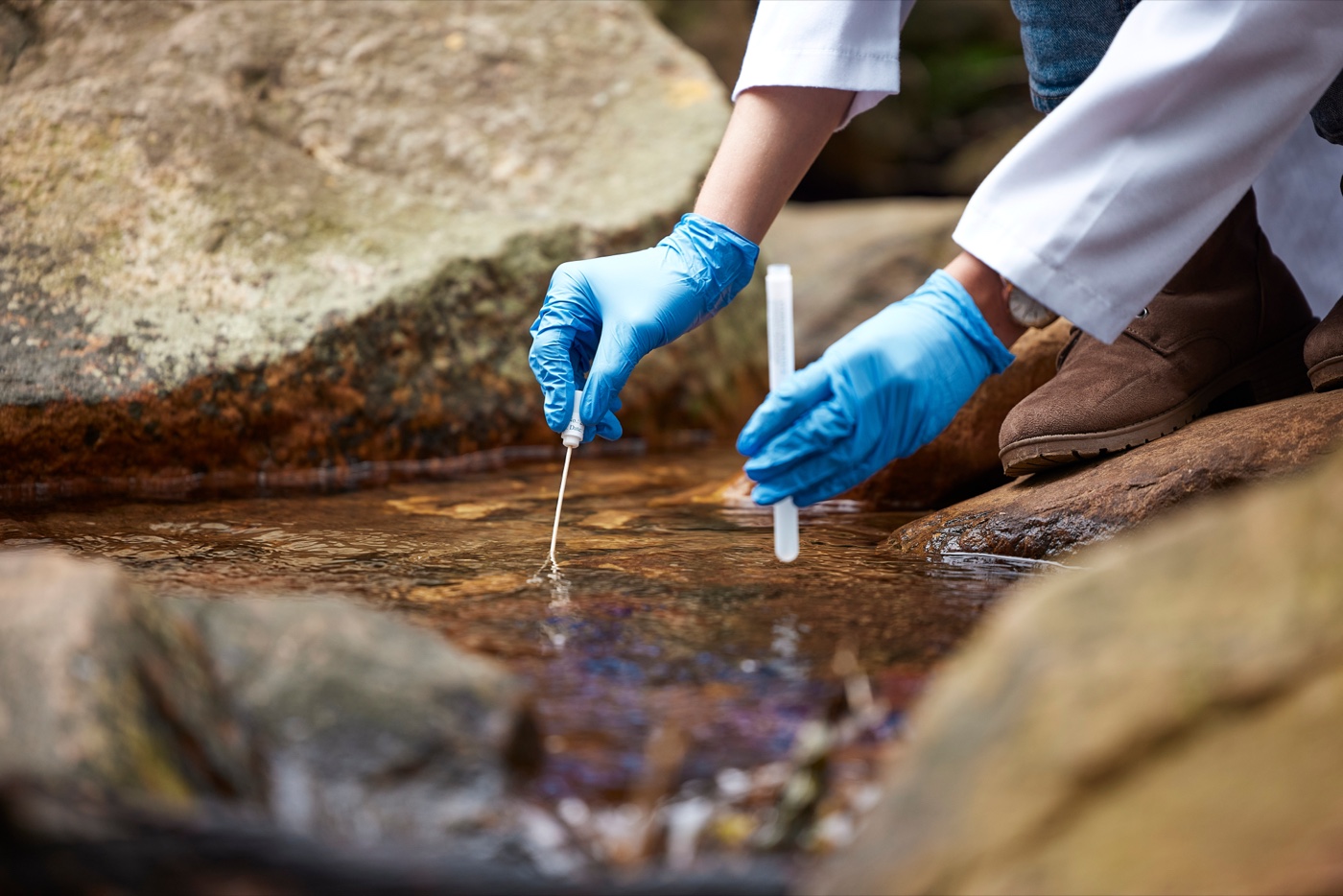
Bore, dam, creek, tank or reuse line. Baseline chemistry, nutrient loads and irrigation suitability read against the soil it lands on.
- pH & EC
- Turbidity
- Alkalinity
- Total N & P
- SAR
- Dissolved metals
Five steps, and the first one is a conversation.
Nothing goes to site until the scope is agreed in writing — parameters, methods, containers, numbers and handling. That is the step that protects the result.
Brief
Tell us the site, the sample type and the decision the result has to support. A paragraph is usually enough to start.
Scope
We confirm parameters, methods, container type, sample numbers and anything your reporting obligation requires — before you go to site.
Collect
You sample to the plan, or we work through it with whoever is doing the collection. Containers, labelling and handling are agreed in writing.
Analyse
Samples are received, logged and run. If something arrives compromised — broken, warm, outside holding time — you hear about it that day, not in the report.
Interpret
We walk you through what the numbers mean for your site, what they do not mean, and what would be worth repeating.
A laboratory that has spent time in the field.
Sure Environmental Laboratories sits alongside Sure Seed Nursery. The same people who work on germination, threatened flora and restoration supply are the ones reading your soil and water results.
That background changes the conversation. We have watched plantings fail on sites with a clean fertility report, and succeed on sites that looked marginal on paper. So we ask about the species, the timing and the site preparation before we tell you what a number means.
Tell us about the site and we will scope it.
A paragraph is enough to begin. Sample type, rough location, how many you expect to take, and the question the results have to answer.